Schema Markup for AI Search: What to Add and Where
A page by page guide to the structured data that helps search engines and AI assistants understand your business, with a JSON-LD example, common mistakes and how to test it.
Read the guideThe structure, formatting and writing habits that make a page easy for ChatGPT, Gemini and Perplexity to extract, quote and cite, with a before and after rewrite.
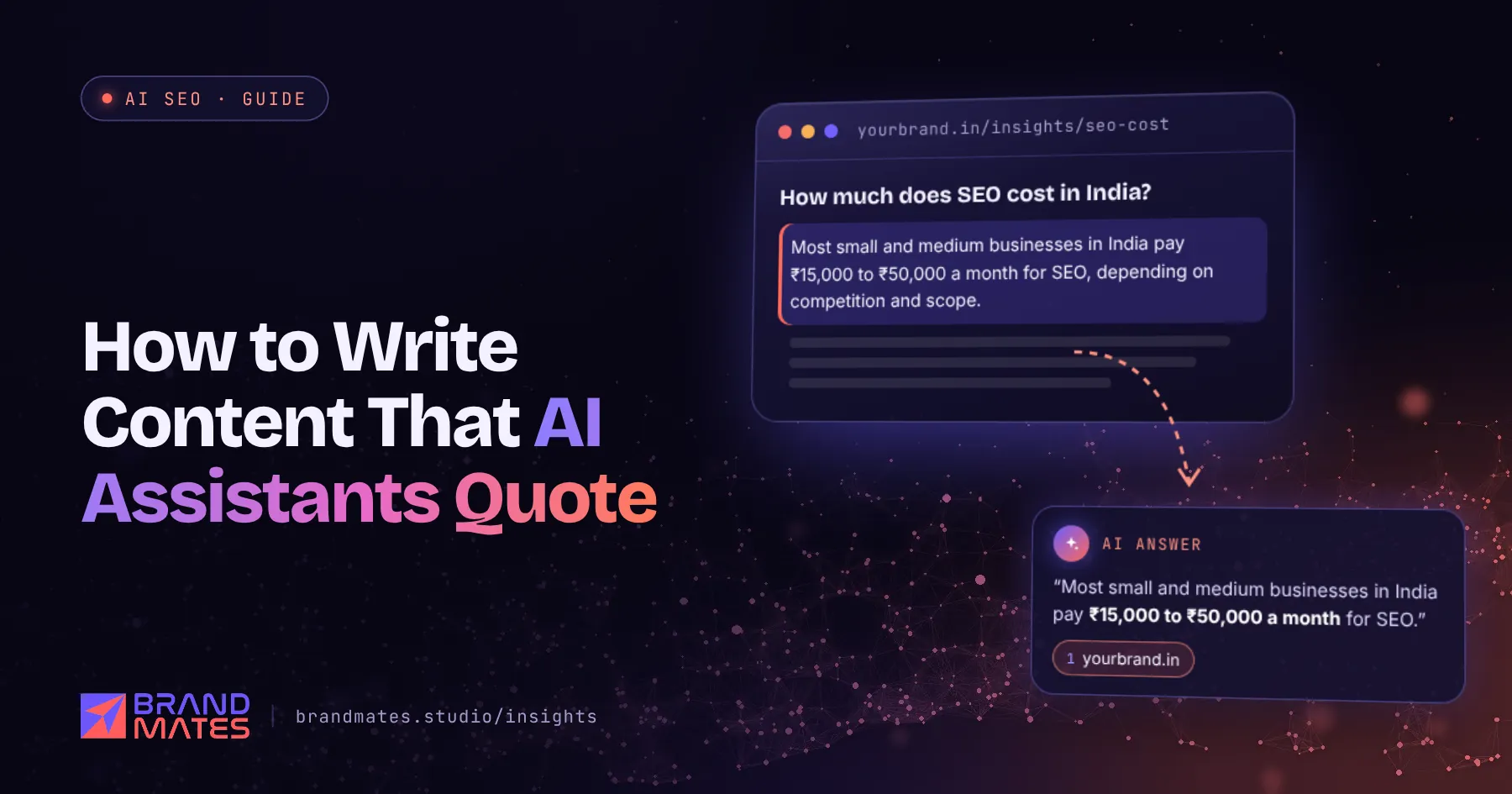
When ChatGPT, Gemini or Perplexity answers a question, it reads a handful of pages and pulls out the passages that answer it. Some pages get quoted and cited. Most get read and ignored.
The difference is rarely the topic. It is how the page is written. This guide explains how to write content that AI assistants quote: the structure, the habits and the formatting that make a page easy for a machine to extract and safe for it to attribute to you. It is part of our complete AI SEO guide.
An AI assistant answering a question with live information typically does three things. It retrieves candidate pages, it reads them and extracts the passages that answer the question, and it writes a response that cites some of those sources.
Extraction happens at the level of a passage, not a page. The assistant is looking for a few sentences that answer the question on their own, clearly and with confidence. A page that buries its answer under three paragraphs of introduction, or spreads one fact across several sections, is harder to use than a page that states it plainly in one place.
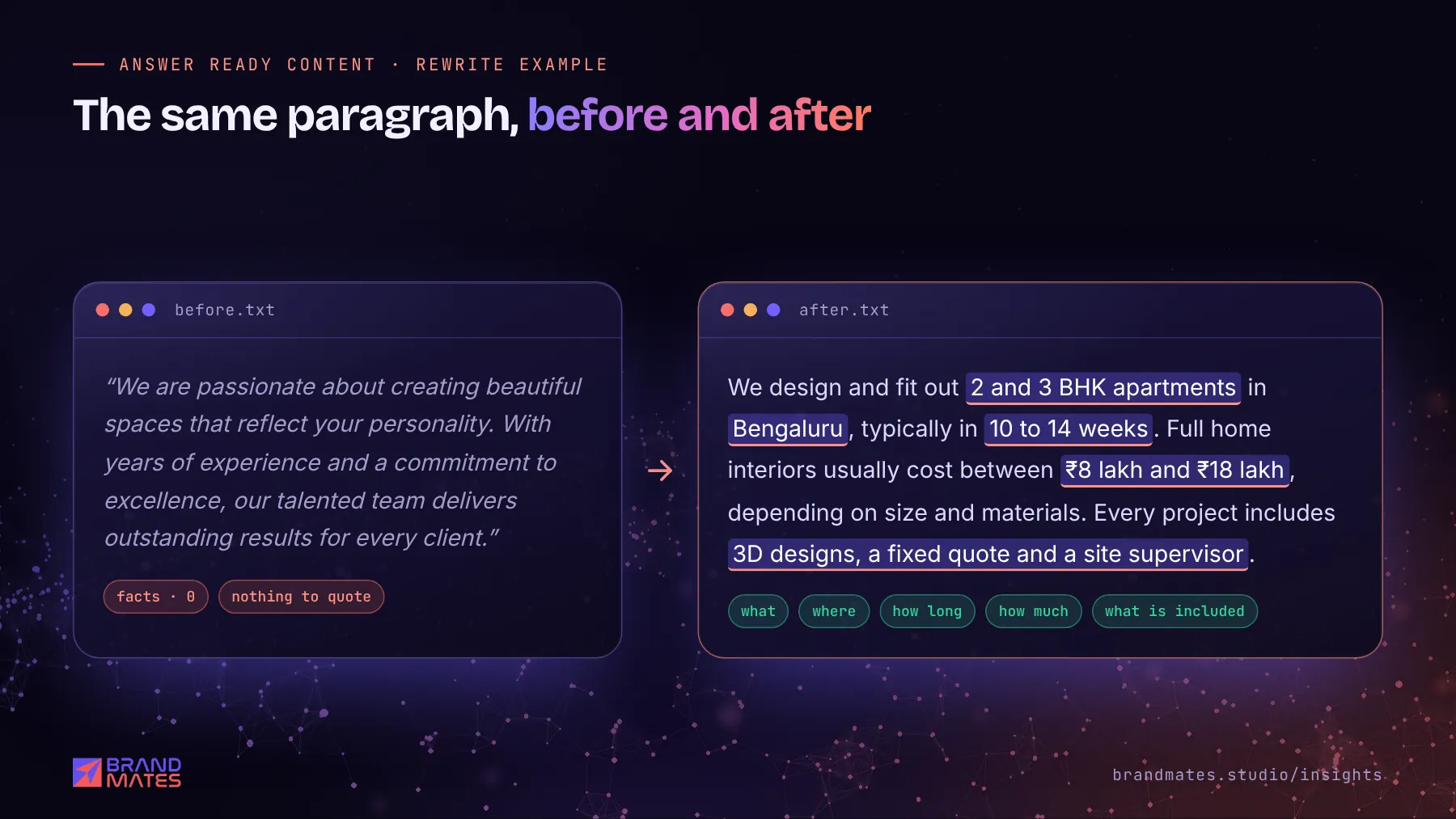
Put the direct answer in the first one or two sentences under each heading, then add detail and examples below it. For AI search this is the most useful habit of all, because the passage an assistant extracts is usually the one that answers the question immediately.
Write headings the way buyers ask questions: "How much does a drone light show cost in India?" rather than "Pricing". Use the questions your sales team hears, the queries in your Search Console report and the "People also ask" boxes in Google. Our keyword research guide explains how to collect them.
An assistant may quote one section without the rest of the page. Avoid phrases such as "as mentioned above" and name the subject in each section so the passage makes sense alone.
Specific facts are what assistants extract and what buyers trust. Compare "affordable pricing" with "packages from ₹25,000 a month", or "fast delivery" with "delivered in 3 to 5 working days across India". Locations, price ranges, timelines and measurable results give a model something concrete to quote.
Tables are easy for machines to read correctly, because each value sits next to its label. Use them for comparisons, price ranges and specifications, numbered lists for processes and bullet lists for features.
When a page introduces a concept, define it in one sentence using a simple pattern: "AI SEO is the work of making your brand visible and recommended inside AI generated answers." Definitions in this form are frequently quoted almost word for word.
Generic advice is everywhere, so an assistant has no reason to cite your version of it. Original numbers, real project examples, your own pricing data and survey results give your page something no other page has.
Add an author with a short bio, a published date and a visible "last updated" date on content that changes. Freshness and accountability are both signals of trust, and some assistants, Perplexity in particular, lean towards recently updated pages. See how to get your brand cited by Perplexity.
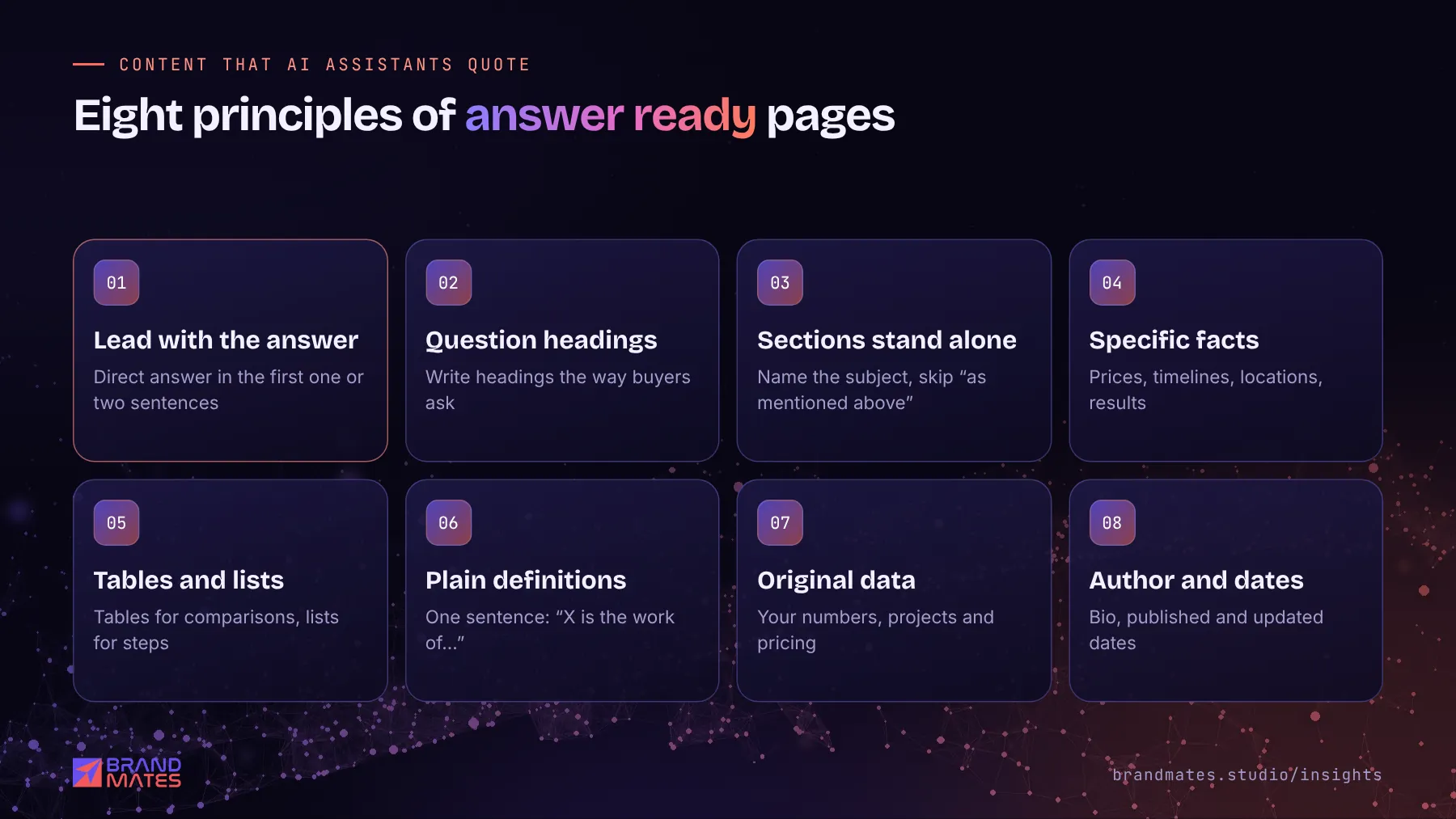
Here is an illustrative example for an interior design studio. The facts are invented for the example, but the pattern is the one we use on client pages.
Before:
We are passionate about creating beautiful spaces that reflect your personality. With years of experience and a commitment to excellence, our talented team delivers outstanding results for every client.
After:
We design and fit out 2 and 3 BHK apartments in Bengaluru, typically in 10 to 14 weeks. Full home interiors usually cost between ₹8 lakh and ₹18 lakh, depending on size and materials. Every project includes 3D designs, a fixed quote and a dedicated site supervisor.
The first version contains no facts. An assistant asked "which interior designers in Bengaluru do full home interiors, and what do they cost?" has nothing to extract. The second version answers that question in three sentences: what, where, how long, how much and what is included.
| Element | Weak version | Answer ready version |
|---|---|---|
| Opening line | "Welcome to our website" | "We install rooftop solar for homes and offices across Pune" |
| Heading | "Our Services" | "What does a rooftop solar installation include?" |
| Price | "Competitive pricing" | "Most 3 kW home systems cost ₹1.8 to ₹2.4 lakh before subsidy" |
| Proof | "Trusted by many clients" | "Over 400 installations since 2019" |
| FAQ answer | "Contact us to know more" | A complete two to three sentence answer |
Start with the pages that bring in business, not the blog.
| Page type | What the first paragraph should say |
|---|---|
| Homepage | What you do, for whom, where, and one proof point |
| Service pages | What the service includes, who it suits, typical timeline and price range |
| Product or collection pages | Key specifications, use case, price and what makes it different |
| Location pages | The services offered in that area and how quickly you can respond |
| About page | Founding year, founders, location, team, industries served |
| Blog articles | The direct answer to the question in the title |
The about page matters more than most businesses expect. It is often where an assistant learns who you are, which is the foundation of entity SEO.
Want to know if ChatGPT recommends you?We test your buyer questions across ChatGPT, Gemini, Perplexity and AI Overviews, then show you exactly what to fix.
FAQ sections work well for AI search when they are built from real questions and real answers. A few rules:
Google stopped showing FAQ rich results in Search in May 2026, so do not add FAQs expecting extra space on the results page. Add them because they answer buyer questions in a format machines read easily. Our guide to schema markup for AI search shows the markup.
Keep important content in HTML text. Text inside images, PDFs or content that only appears after a script runs is harder for crawlers to read. Google's own guidance for AI features recommends keeping important content in text form.
Use one H1 and a logical heading order. H2s for main questions, H3s for sub points. Our on page SEO checklist covers the rest of the page level basics.
Avoid contradicting yourself. If your service page says delivery takes five days and your FAQ says seven, an assistant has a reason to trust neither.
Stuffing pages with questions. Twenty thin FAQs make a page worse for readers. Assistants are increasingly good at recognising low value content.
Vague superlatives. Claims like "world class" or "number one" cannot be checked, so they carry no weight with buyers or assistants.
Outdated facts. An old price or a discontinued service quoted by an assistant is worse than not being quoted at all. Review key pages every quarter.
Using AI to write it all. AI can help draft, but unedited output tends to be generic and adds nothing an assistant has not already read.
Run the questions your buyers ask through ChatGPT, Gemini and Perplexity once a month and note whether your pages are cited. Our guide on how to check if ChatGPT recommends your brand includes a ready prompt list. In Google Analytics 4, track referrals from AI assistants as their own channel so you can see visits and conversions grow.
On one Shopify smart TV store, we rewrote product and collection copy to answer buyer questions directly, added product and FAQ schema and fixed page structure. Comparing August 2026 with February 2026 in GA4, organic search users grew from 172 to 3,286 a month and engagement rate rose from 56% to 84%. See the Shopify SEO case study.
If you want your service and product pages rewritten to be answer ready, our content marketing services team does exactly this, alongside schema and technical fixes. Start with a free AI visibility audit and we will show you which pages to fix first.
Answer ready content is writing structured so that both people and AI assistants can find a direct answer quickly. It leads with the answer, uses headings that match real questions, states specific facts and keeps each section understandable on its own.
There is no fixed length, but the passages most often quoted are short and complete: one to three sentences that answer the question directly, followed by supporting detail. Under each heading, put the core answer in the first 40 to 60 words.
No. Start with the pages that bring in business: the homepage, main service or product pages, location pages and the about page. Rewriting five to ten key pages usually matters more than publishing new blog posts.
Google no longer shows FAQ rich results, so the markup will not change how your listing looks. It still describes your questions and answers in a standard format that machines can read, which is why we continue to add it where pages have real FAQs.
Mostly no. Clear structure, direct answers, specific facts and real expertise help with both. The main difference is emphasis: AI assistants quote passages, so each section needs to make sense on its own and lead with the answer.
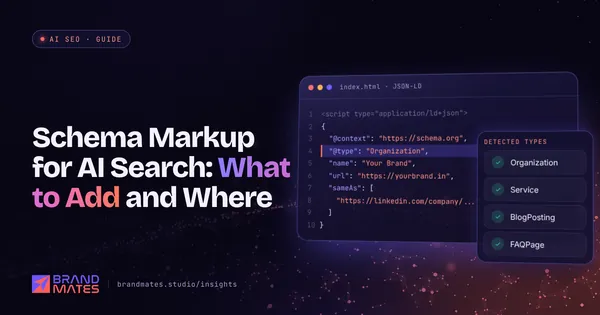
A page by page guide to the structured data that helps search engines and AI assistants understand your business, with a JSON-LD example, common mistakes and how to test it.
Read the guide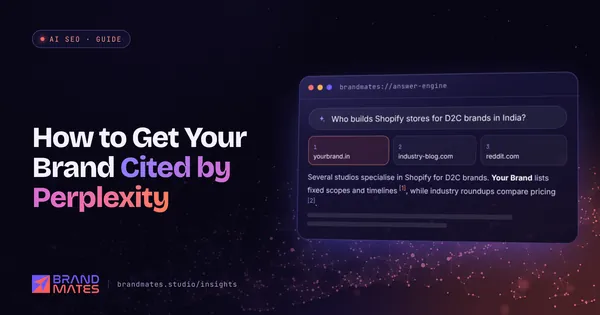
How Perplexity retrieves and cites sources, the two crawlers you need to allow, and a step by step plan to get your brand named and linked in its answers.
Read the guide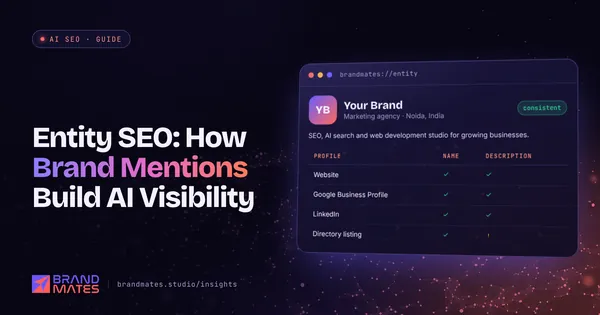
Why AI assistants recommend brands they can recognise and trust, and how to build the consistent descriptions, schema, mentions and reviews that make your brand an entity.
Read the guideTell us where your brand needs to go. We'll come back with a free audit, a plan and a realistic timeline, usually within two working days.