How Long Does SEO Take to Show Results?
A realistic month by month SEO timeline, the six factors that decide how fast results arrive, and the early signals that show it is working.
Read the guideA beginner friendly explanation of what SEO is, how Google crawls, indexes and ranks pages, the main types of SEO and how it compares with paid search.
If you run a business, you have probably been told you "need SEO". Fewer people explain what that actually means, or how it works.
This guide answers what is SEO in plain language: what the term means, how search engines decide which pages to show, the main types of SEO, how it compares with paid ads and how it connects to AI search. It is written for beginners and is part of our complete SEO guide for businesses, which goes deeper on every topic.
SEO stands for search engine optimisation. It is the work of improving your website so that it appears higher in the unpaid, or organic, results when people search on Google and other search engines.
Those unpaid results sit below or alongside the ads. You cannot pay Google to rank there. You earn the position by having pages that Google considers the most relevant, useful and trustworthy answer to the search.
When SEO works, people searching for what you sell find your website instead of a competitor's, and every visit arrives without a cost per click.
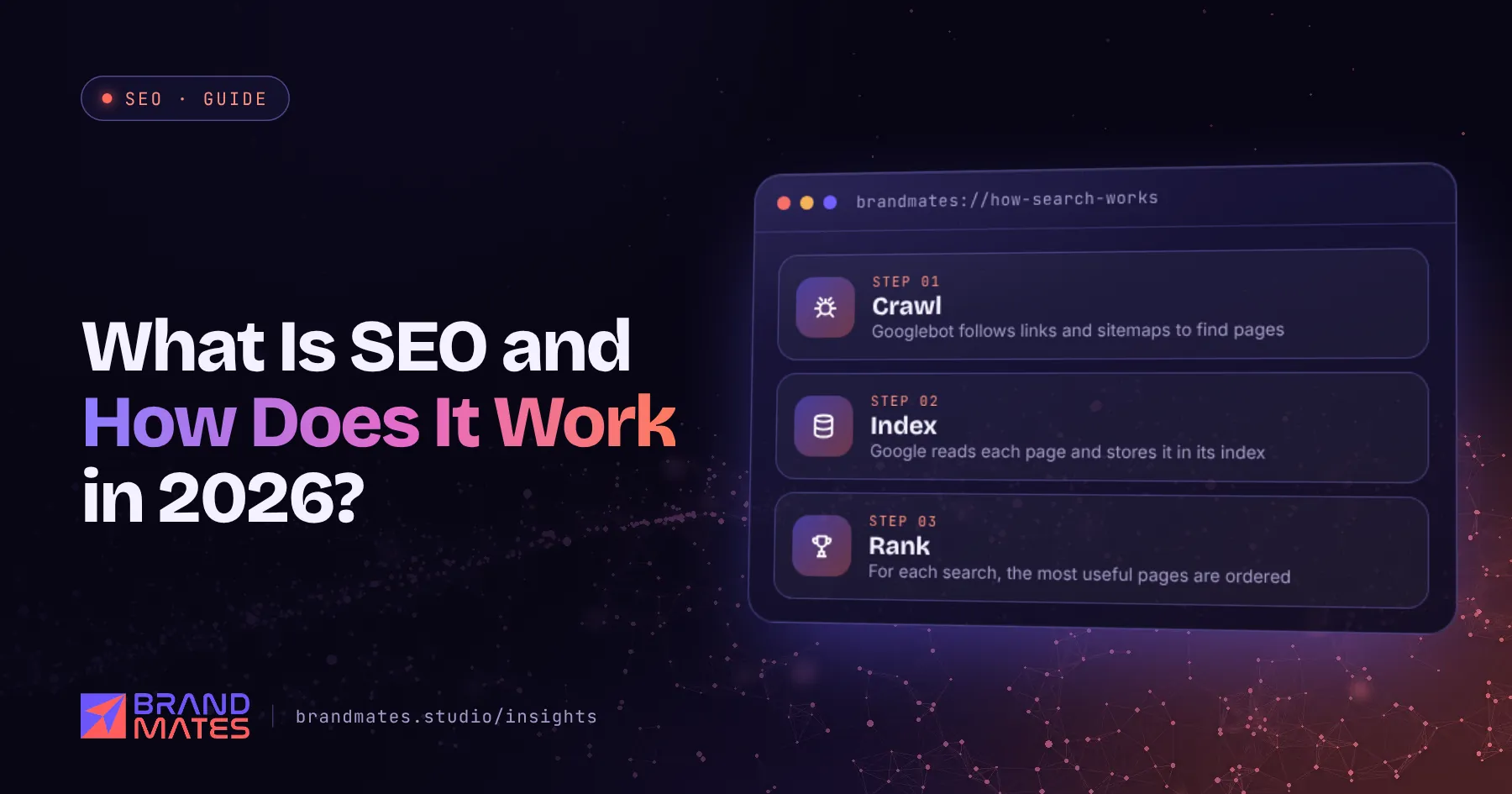
To understand how SEO works, it helps to know what Google does behind the scenes. There are three stages.
Google uses automated programs called crawlers, the main one being Googlebot, to discover pages across the web. Crawlers follow links from page to page and read XML sitemaps that site owners submit. If no links point to a page and it is not in a sitemap, Google may never find it.
After crawling a page, Google analyses its text, images, headings and structure to understand what it is about, then stores it in a huge database called the index. A page that is not indexed cannot appear in search results at all. You can check which of your pages are indexed in Google Search Console.
When someone searches, Google looks through its index and orders the pages it thinks will help most. It uses many signals, which fall into a few broad groups:
SEO is the work of improving your site on each of these.
| Type | What it covers | Example tasks |
|---|---|---|
| On page SEO | Making each page clearly relevant to its target search | Titles, headings, content, internal links, image alt text |
| Technical SEO | Making sure search engines can crawl, index and load the site | Site speed, mobile usability, sitemaps, redirects, structured data |
| Off page SEO | Building authority from outside your website | Earning backlinks, digital PR, brand mentions |
| Local SEO | Ranking for searches in a specific area | Google Business Profile, reviews, local listings, location pages |
| Content SEO | Creating pages that answer what buyers search | Keyword research, guides, service pages, FAQs |
| Ecommerce SEO | Ranking product and category pages for online stores | Product titles, collection pages, product schema |
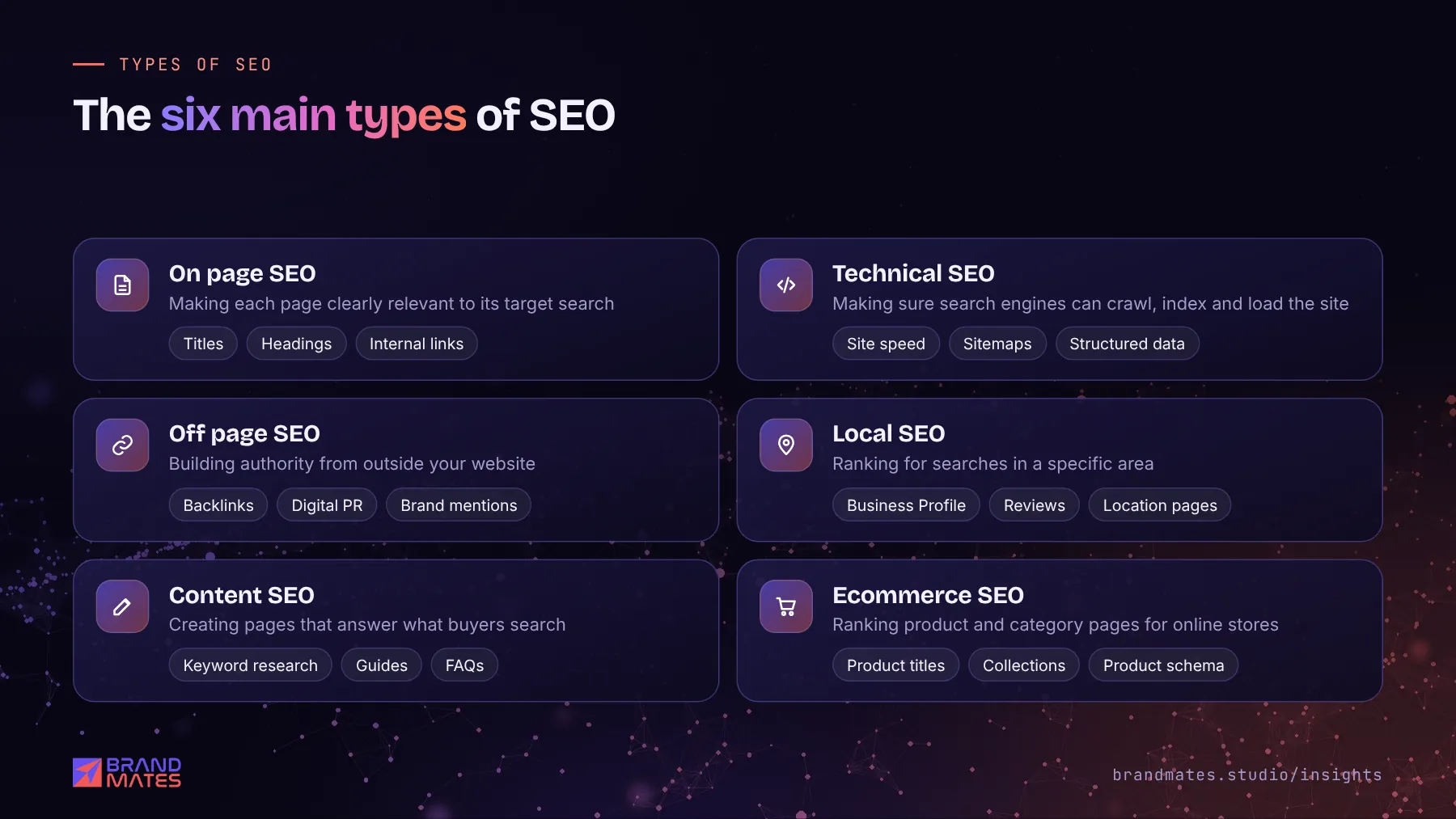
Most businesses need a mix of these. A local clinic leans on local SEO. A Shopify store leans on technical and ecommerce SEO. A B2B manufacturer often needs strong product content and technical work.
Our guides go deeper on each one: the on page SEO checklist, the technical SEO checklist and the link building guide.
Paid search, such as Google Ads, puts your website at the top of results immediately, but you pay for every click. SEO earns rankings in the organic results.
| SEO | Paid search | |
|---|---|---|
| Cost model | Ongoing investment in work, no cost per click | Pay for every click |
| Speed | Builds over months | Traffic from the first day |
| When you stop | Rankings usually hold for a while, then fade | Traffic stops immediately |
| Trust | Many users trust organic results more | Clearly labelled as sponsored |
| Long term value | Compounds as content and authority grow | Stays roughly flat for the same budget |

Most growing businesses use both. Ads bring leads while SEO builds, and the keyword data from ads helps decide what SEO should target. Our performance marketing team often runs both together.
Not sure what is holding your site back?We check technical health, content, competitors and AI visibility, then send a prioritised fix list within two working days.
A typical SEO programme follows a sequence:
On a smart TV brand's Shopify store, this sequence of technical fixes, keyword mapping, schema and answer ready content took organic search users from 172 to 3,286 a month, comparing August 2026 with February 2026 in GA4. See the Shopify SEO case study.
SEO is not instant. Google's SEO Starter Guide says some changes take effect in a few hours while others can take several months, and suggests waiting a few weeks before judging results. Technical fixes can show movement within weeks, while content and authority build over three to six months and beyond. We explain the full timeline in how long does SEO take.
More buyers now ask ChatGPT, Gemini, Perplexity and Google's AI Overviews for answers and recommendations. These systems still depend heavily on websites that are well indexed, clearly structured and trusted, which is the same foundation SEO builds.
AI search adds some extra work on top: structured data, content written to be quoted and brand mentions across trusted sources. The practice of optimising for these assistants is often called AI SEO, and we explain it in our AI SEO guide.
If you are new to SEO, start with three things: set up Google Search Console and Google Analytics 4, make sure your important pages are indexed and fast on mobile, and write clear, useful pages for the services you sell.
When you are ready for a full programme, explore our SEO services or request a free SEO audit. We will show you exactly where your site stands and what to fix first.
SEO, or search engine optimisation, means improving your website so it appears higher in Google's unpaid results when people search for what you offer. It covers your content, your site's technical health and the links other sites give you.
Organic traffic has no cost per click, but SEO itself takes time, skills and tools. You either invest your own time or pay a specialist, freelancer or agency to do the work.
The three core parts are on page SEO, technical SEO and off page SEO. On page covers content and page elements, technical covers crawling, indexing and speed, and off page covers links and mentions from other websites.
Yes. Google's own SEO Starter Guide and free tools like Search Console are a good place to start. The basics are learnable, but technical SEO, migrations and competitive categories usually benefit from specialist experience.
Yes, and local SEO is often the most effective channel for small businesses. Optimising a Google Business Profile, earning reviews and creating useful local pages can bring steady enquiries from nearby customers.

A realistic month by month SEO timeline, the six factors that decide how fast results arrive, and the early signals that show it is working.
Read the guide
How to earn backlinks that build real authority, what Google's spam policies say about link schemes, and the tactics that put your site at risk.
Read the guide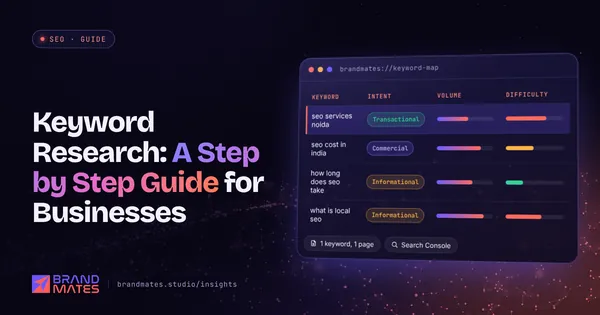
How to find the searches your buyers actually make, sort them by intent, map each one to the right page and decide what to target first.
Read the guideTell us where your brand needs to go. We'll come back with a free audit, a plan and a realistic timeline, usually within two working days.